
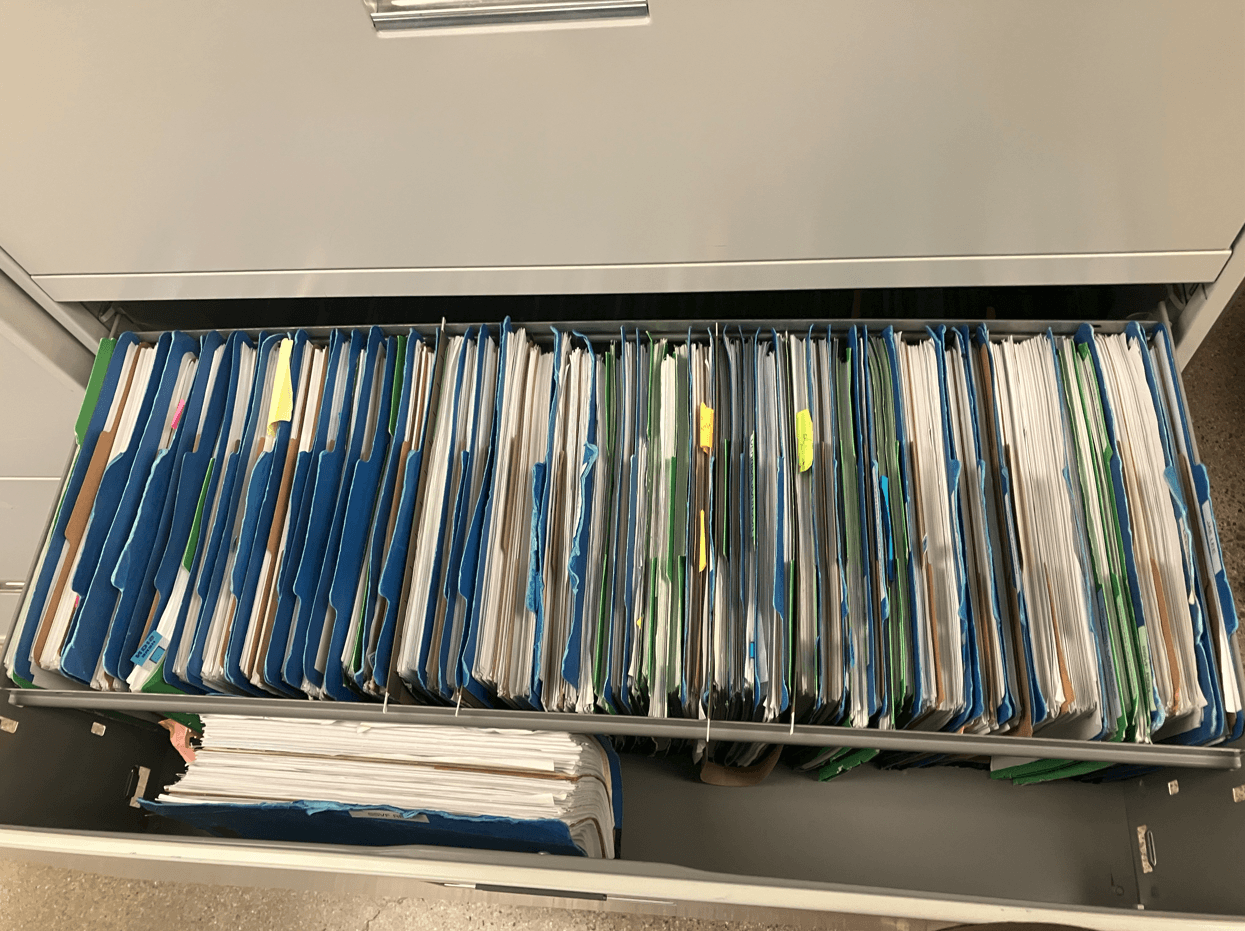
There’s a version of the post-loss conversation that nobody warns owners about. The fire is out, the units are red-tagged, and the adjuster is being perfectly reasonable. He just needs the documentation: leases for every unit, the rent roll, the last three years of repair invoices, the roof replacement receipt, the electrical permit from the 2019 upgrade, and the vendor contracts.
And the owner says the thing I’ve heard more than once — it’s all in the leasing office. In the building.
That’s the whole problem in one sentence.
What a carrier actually asks you to produce
A property claim is not settled on the strength of your recollection. It’s settled on documentation, and the list is longer than most owners expect:
-
Leases and the rent roll — this is how loss of rents gets calculated. No leases, no documented rental income, and your business income recovery becomes an argument instead of a calculation.
-
Repair and maintenance history — proves the building was maintained, and heads off the “pre-existing condition” and “deferred maintenance” angles.
-
Capital improvement records with dates — roof, plumbing, electrical, HVAC. These support your values and defend against depreciation.
-
Permits and inspection reports — proves work was done to code, which matters enormously in an LA claim involving any structural rebuild.
-
Vendor contracts and invoices — establishes what things actually cost you, not what the carrier’s software estimates.
-
The statement of values backup — the estimator output or comparable construction data your numbers came from.
Missing pieces don’t usually kill a claim outright. They do something quieter and more expensive: they slow it down, and they shift every ambiguity in the carrier’s favor. An owner who can produce a complete, dated file in 48 hours settles on very different terms than one who is reconstructing history from memory and a few emails.
The same file wins your renewal
Here’s the part owners underrate. That documentation packet isn’t just a claims asset — it’s the core of a strong submission.
In the current LA habitational market, underwriters are working through a stack of submissions and looking for reasons to decline. As we covered in the 90-day renewal checklist and the E&S guide, the submissions that get quoted — and get quoted well — are the ones with documented updates, clean loss history, and values that are visibly grounded in something real.
An owner who can attach dated proof of a 2022 roof replacement and a 2021 panel upgrade is a fundamentally different risk than an owner who writes “roof updated, approx. 2020?” in an email. Same building. Very different outcome on the quote.
The single point of failure
Now put those two things together. The documentation that determines your claim outcome and your renewal terms is, for most owners I work with, physically stored in the asset it’s meant to protect.
A fire that takes the building takes the file room. So does flooding from a burst riser. So does a break-in, a disgruntled departure by an on-site manager, or simply twenty years of drift where nobody can find the 2013 permits anymore.
It’s an unhedged risk sitting in plain sight, and it’s one of the cheapest ones on the list to fix.
What to digitize, in priority order
You don’t need to scan everything. You need the file that answers a claim:
-
Every current lease, plus the rent roll and any rent-control registration records
-
Purchase and closing documents, title, and the current loan file
-
Capital improvement records — invoices, contracts, and warranties for roof, plumbing, electrical, HVAC, seismic retrofit
-
All permits and inspection reports, including any LADBS correspondence
-
Insurance history — prior policies, loss runs, past claim files
-
Vendor agreements and recurring service contracts
-
Photographs of the property in current condition, dated
For most 1–4 unit buildings this is a few banker’s boxes. For a mid-size apartment portfolio, it’s more — and it’s usually decades deep.
How to actually get it done
Owners stall here, and I understand why: nobody wants to spend three weekends at an office scanner feeding twenty-year-old permits through a sheet feeder.
Outsource it. A commercial scanning service will pick the boxes up, remove staples, scan at production speed, run OCR so the files are keyword-searchable, index them into a folder structure that matches how you actually think about the property, and either return the originals or shred them under chain of custody. For a typical building’s archive, the whole thing runs days, not months.
For clients in LA, we’ve sent people to Turn Source Imaging, who handle pickup, return, and secure shredding across LA County and work in the compliance-sensitive categories. Whoever you use, ask for OCR and indexing, not just images. A scanned PDF you can’t search is a filing cabinet with extra steps.
One detail worth specifying up front: tell them how you want the folder structure organized. By property, then by category, then by year is the structure that maps cleanly to how an adjuster and an underwriter will ask for things.
Where to keep it
Digitizing solves nothing if the drive lives in the same building. Three rules:
-
Cloud storage, not just a flash drive in the manager’s office
-
A second copy somewhere independent of the first — a different provider or an off-site drive
-
Access for the people who need it — your broker, your CPA, and at least one person other than you
Then set a calendar reminder to add each year’s new records. The file decays fast if nobody maintains it.
Bottom line
Two documents decide most of what happens to an LA apartment owner in a bad year: the policy, and the file that proves what you’re claiming. Owners spend enormous energy on the first and almost none on the second — right up until the week they need it.
Scanning your records is a one-time project that costs less than a single month’s premium on most buildings. If you want a hand deciding what actually needs to be in that file for your specific policy, that’s a conversation we’re happy to have.

